 Engineering Studio Engineering Studio
 Flagship EU-funded R&D — an AR virtual tour of Naoussa's industrial heritage
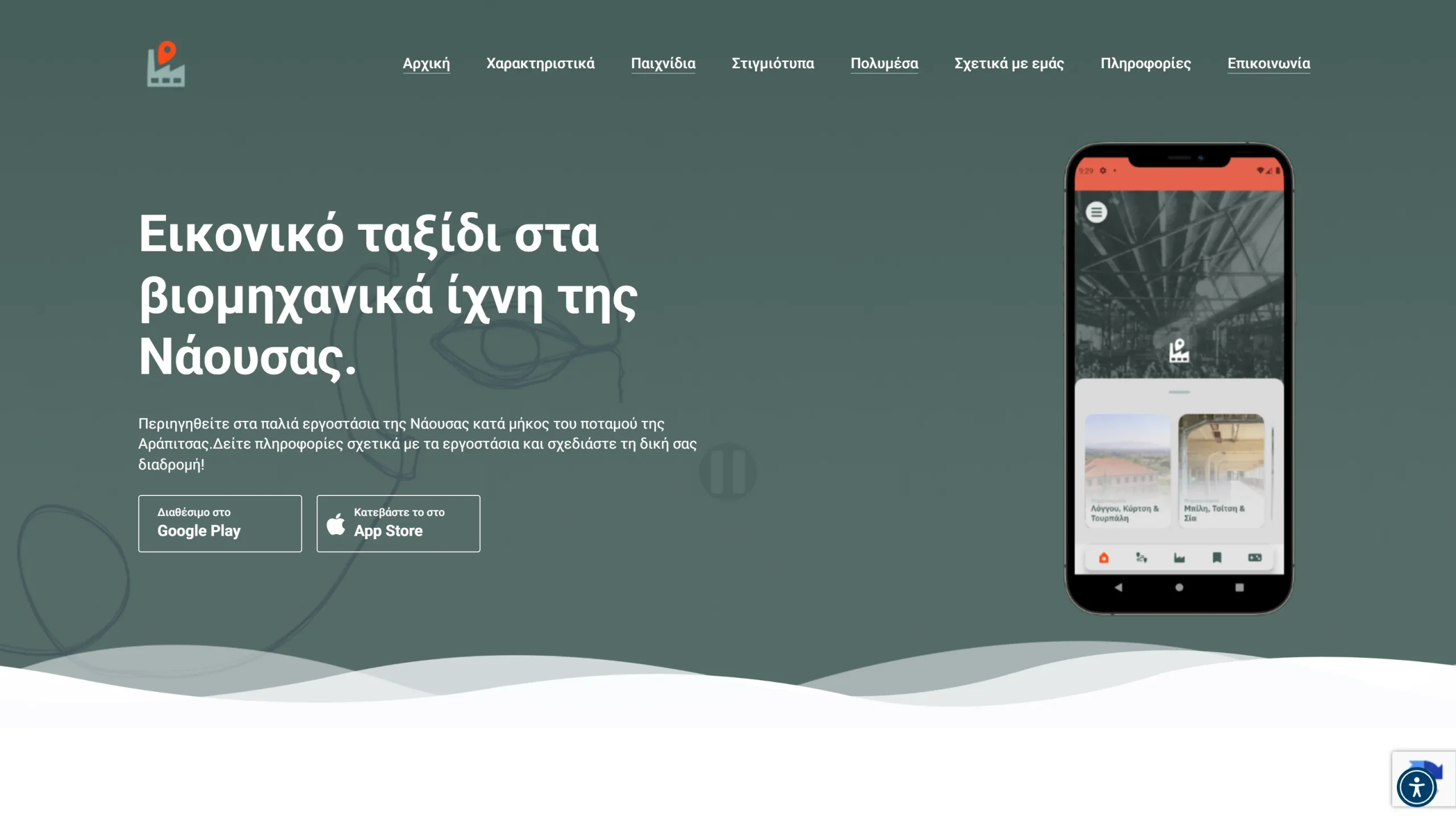
Virtual Journey through the Industrial Traces of Naoussa” (acronym ΕΙΤΑΒΙΟΝΑ, project code Τ1ΕΔΚ-01375) is an EU-funded research and innovation project, co-financed by Greece and the European Union under the ESPA “Research–Create–Innovate” programme, with Kukarika Apps as implementing partner alongside archaeologist-museologists George Adamidis and Valia Amoiridou. Naoussa — once the “Manchester of the Balkans,” a city of hydro-powered textile mills that fell into a deep crisis after its abrupt deindustrialisation in the early 1990s — carries a rich industrial past whose shells now stand idle and unused. The project documents, studies, and brings that heritage back to life: a “virtual tour” platform that runs along the city’s Arapitsa river, where the old textile mills are scattered, turning an ordinary walk into a personal, interactive storytelling experience. Using portable augmented-reality and geolocation technologies, visitors aim their phone camera at the industrial shells, pull up scholarly texts, oral testimonies, and digital reconstructions, and move through a curated industrial trail — connecting Naoussa to other former industrial centres of the region (Thessaloniki, Edessa, Veria) and to the new Industrial Heritage Documentation Centre, ΕΡΙΑ. Kukarika co-led and fully developed the technology — the mobile AR app, the serious games, the 3D and video-art pipeline, and the content backend — end to end.
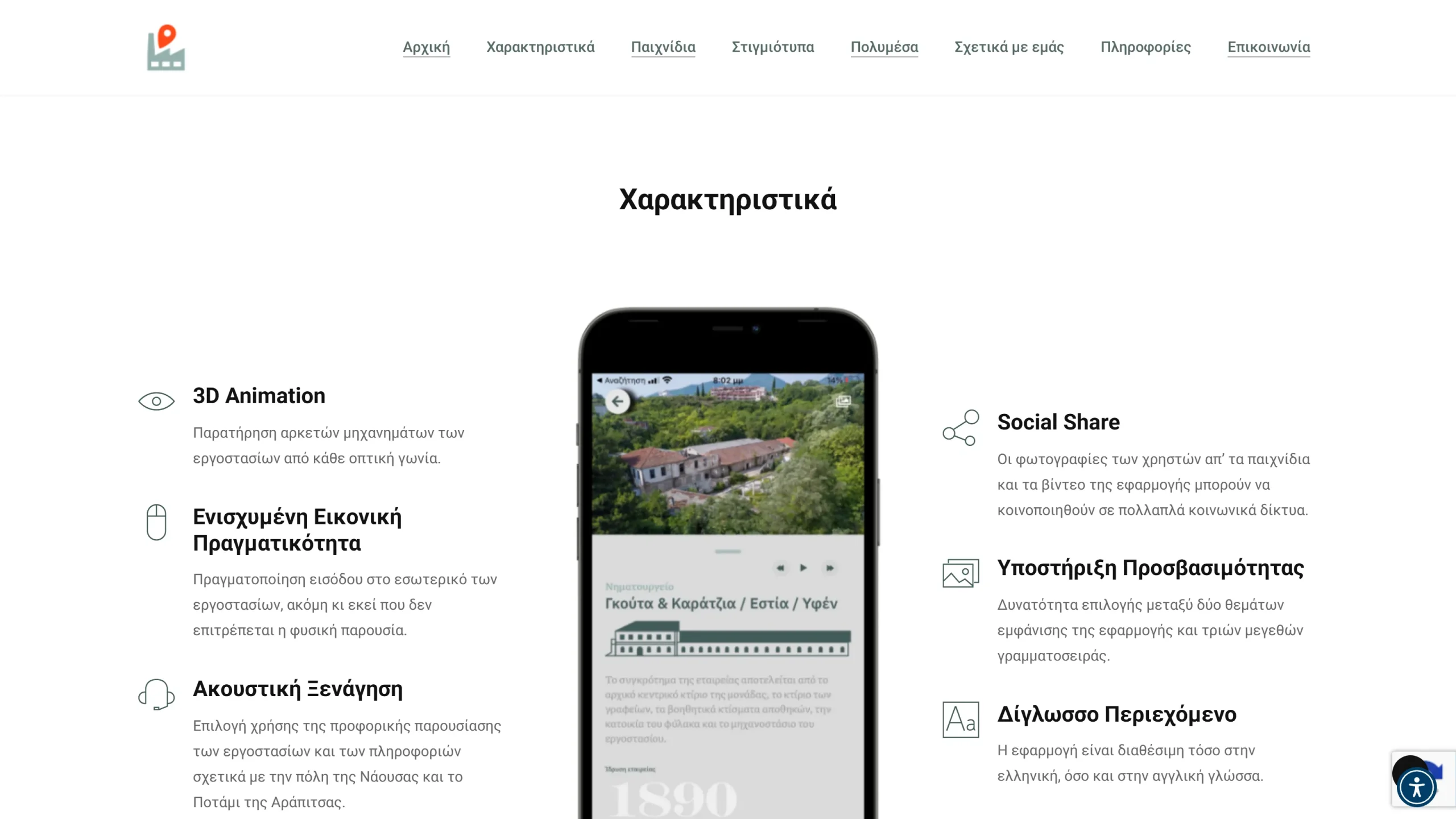
A multidisciplinary, EU-funded R&D project that had to unify rigorous heritage scholarship, on-site augmented reality, geolocation, and game-based learning into a single field-ready bilingual mobile experience — accessible to every audience, including visitors with visual or mobility impairments.
The industrial, social, and economic history of Naoussa had to be presented with academic accuracy — scientific texts and oral testimonies from the ΚΤΒΚ archive — without ever feeling like a dry museum label.
Visitors had to "aim" their phone at a factory shell from a distance and pull up its story — combining the real scene with computer-generated graphics, audio, and 3D, anchored by GPS along the Arapitsa river trail.
A tourism product for visitors AND an educational tool for schools — engaging the younger generation in particular, with a route that can be followed linearly or freely by interest.
Serious games — not gimmicks — that teach the production processes, the machinery, and the human stories while keeping visitors moving along the industrial path.
New museological thinking demanded a carefully designed approach for every audience segment, including blind / low-vision users (narrated audio) and people with mobility difficulties.
Much of the movable heritage no longer exists in situ. Tools, machines, and entire textile production lines had to be digitally reconstructed from the city's industrial photographic archive.
A content-driven platform that the research team can expand — new shells, routes, texts, and media — without launching fresh development cycles.
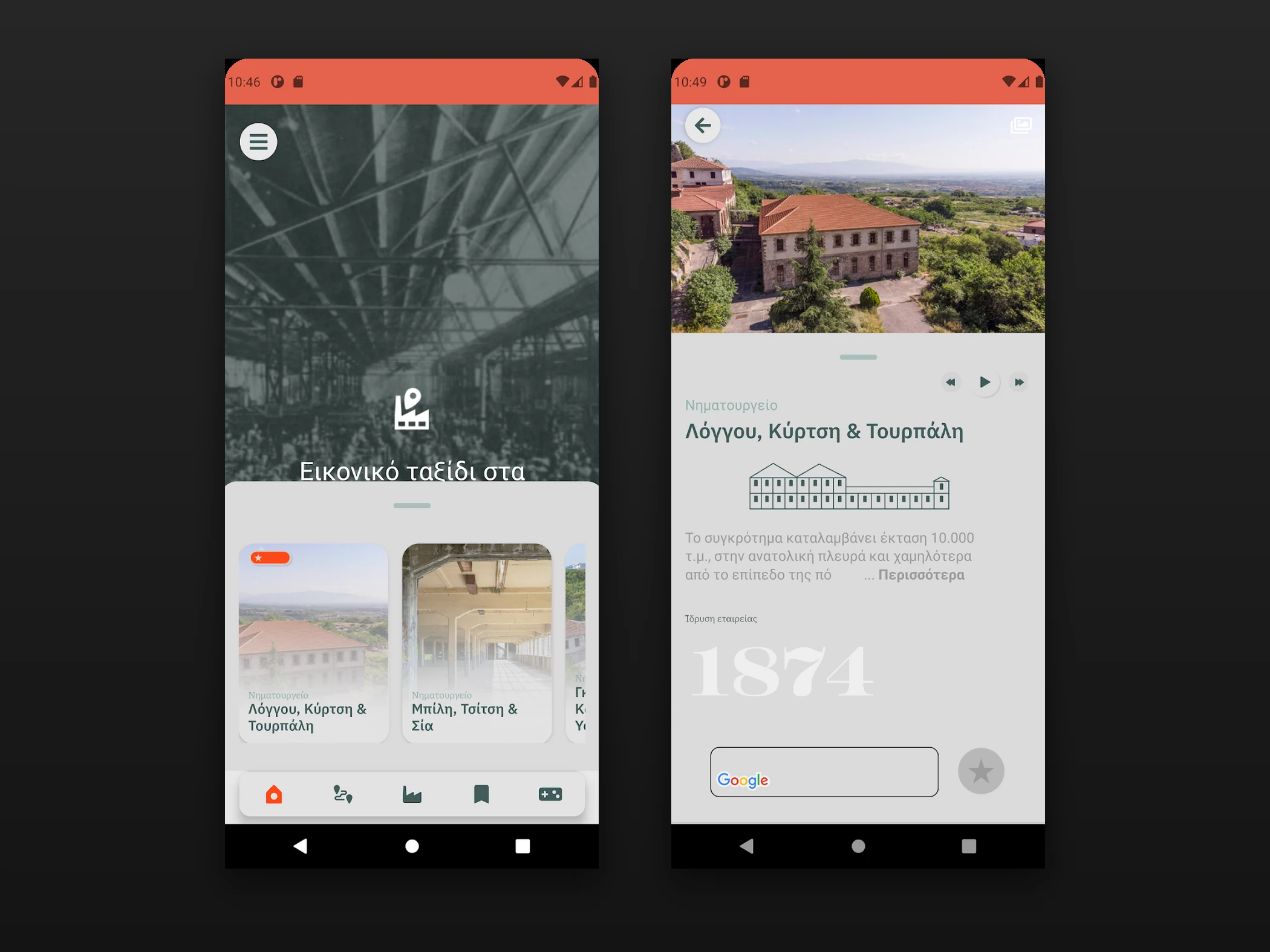
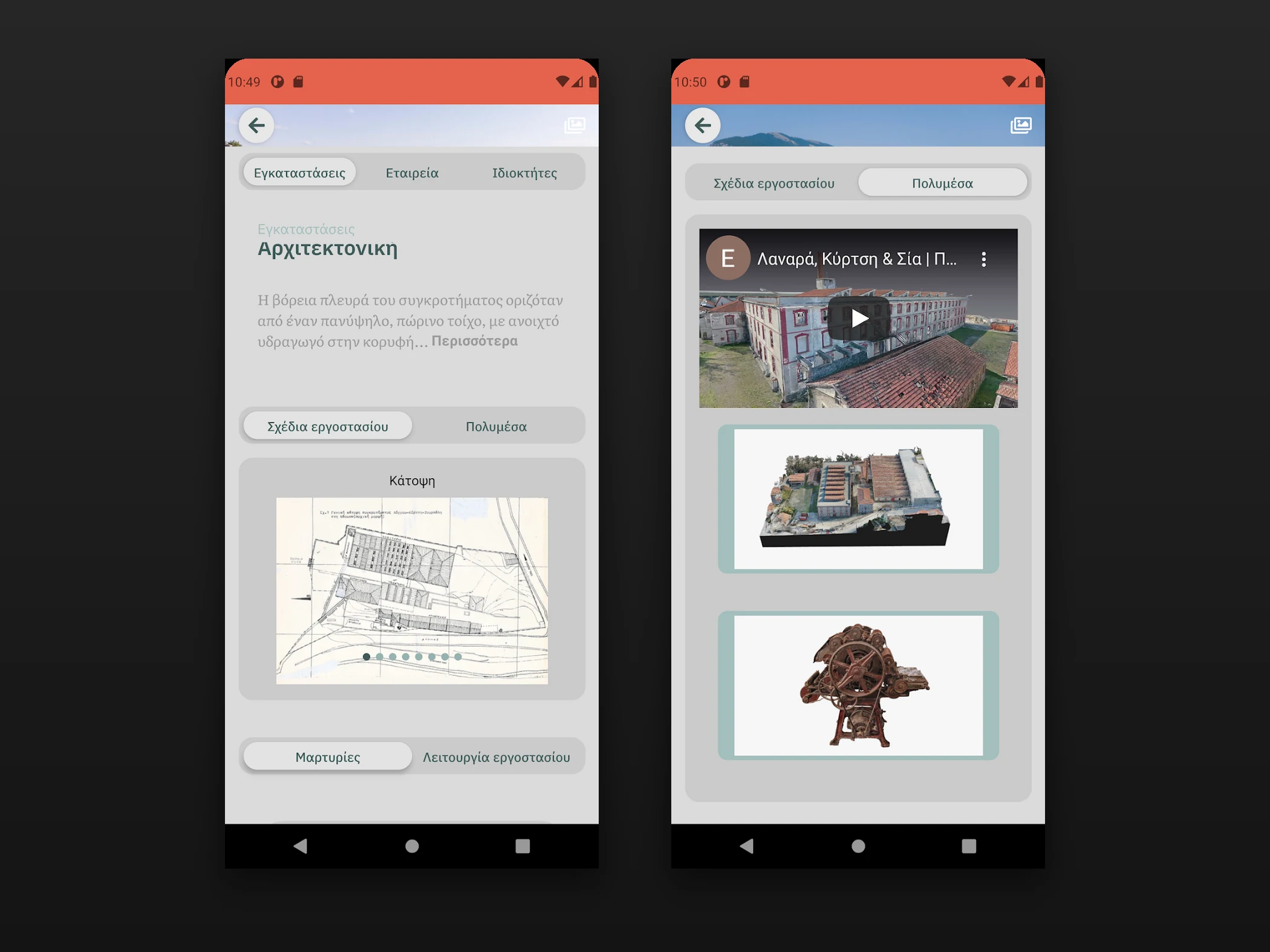
A bilingual AR mobile app, a geolocated industrial trail, a 3D + video-art reconstruction pipeline, a set of pedagogically grounded serious games, and a content backend — built with agile/scrum methodology, co-created with the archaeologist-museologist research team and a network of specialist collaborators.
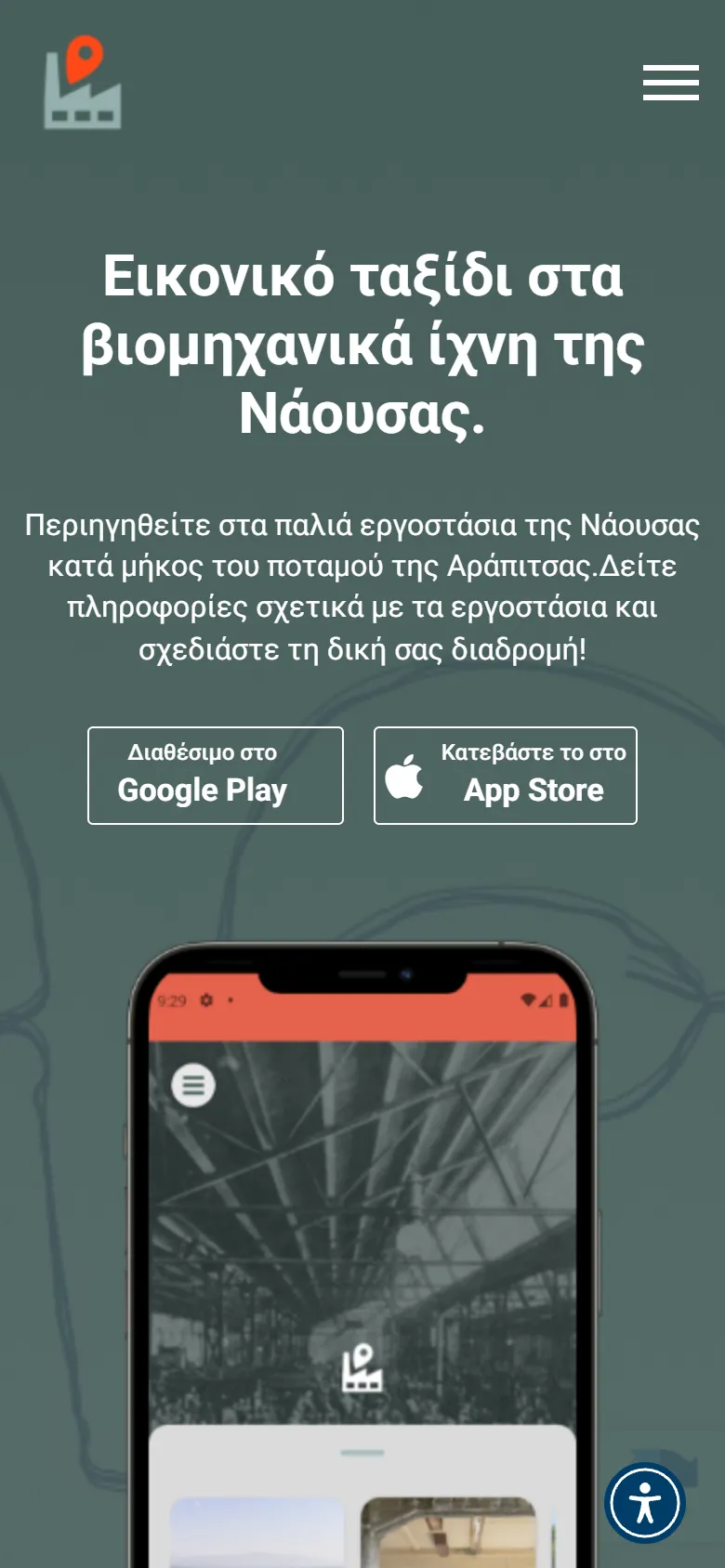
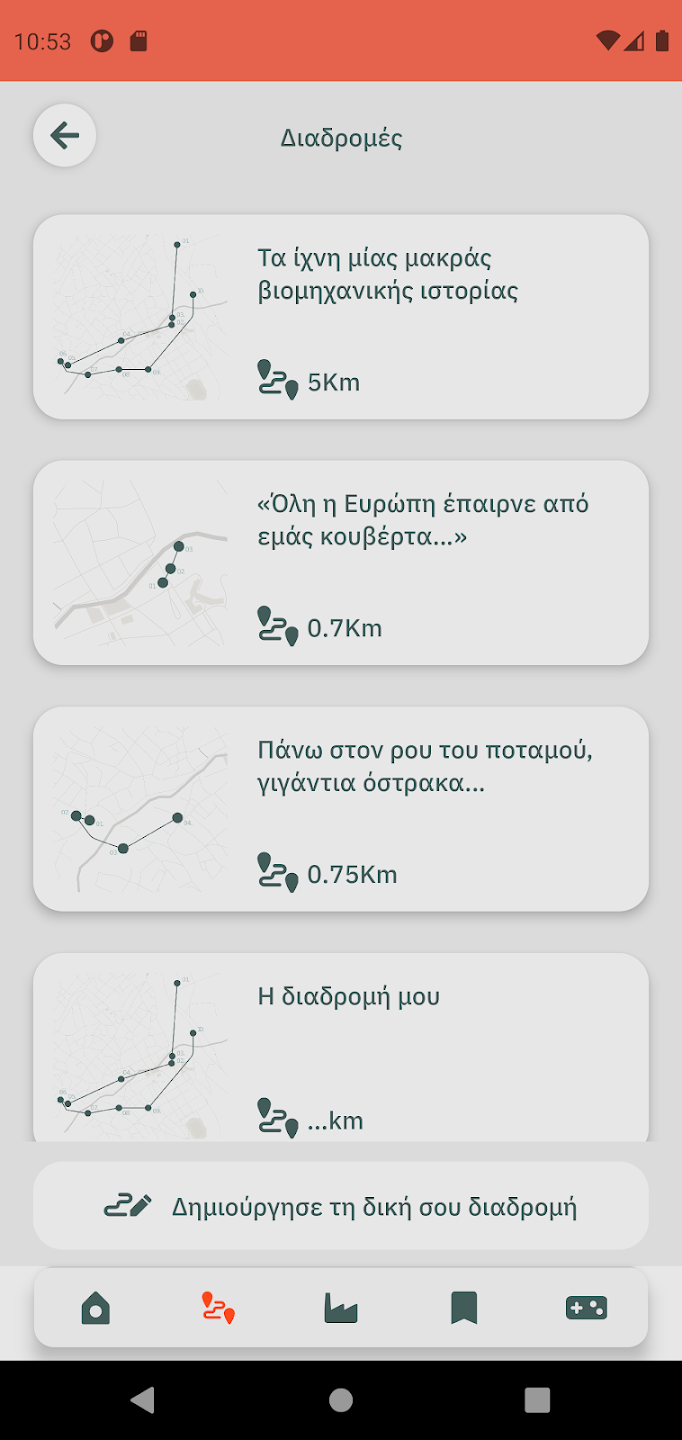
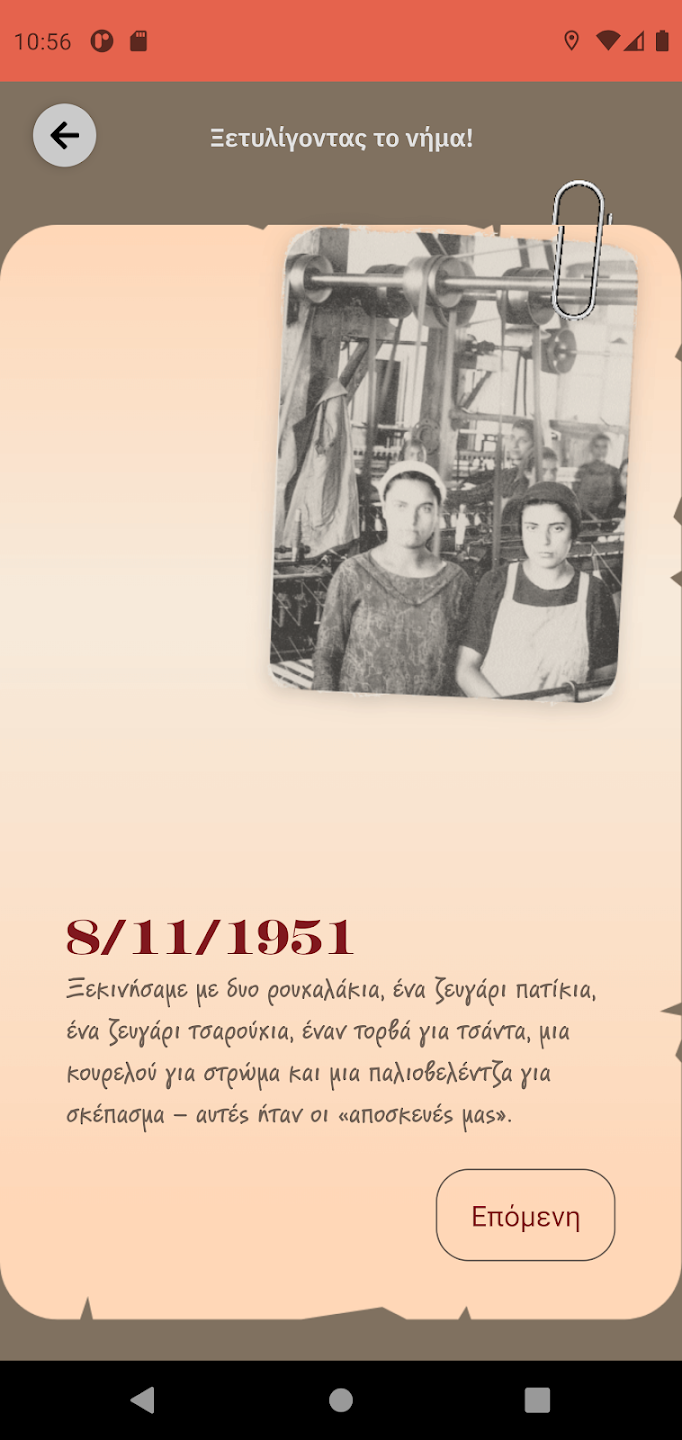
A flagship model of multidisciplinary, EU-funded R&D — and a working proof of Kukarika's ability to lead heritage-technology projects end to end, from oral-history research to on-site augmented reality.
The Naoussa project brings rigorous scholarship and cutting-edge technology together in one product — augmented reality and serious games as core learning mechanics, not gimmicks, anchored to a real walk along the Arapitsa river and the industrial shells scattered along it.
Delivered end to end by Kukarika Apps with archaeologist-museologists George Adamidis and Valia Amoiridou under the ESPA "Research–Create–Innovate" programme (Τ1ΕΔΚ-01375), it turns Naoussa's idle industrial heritage into a living, accessible, educational experience — a lever for the city's tourism, its self-respect, and the collective memory of its people, and a platform ready to scale to new shells, routes, and cities.